
Marine Conservation
California Coalition Launches Whale and Dungeness Crab Initiative
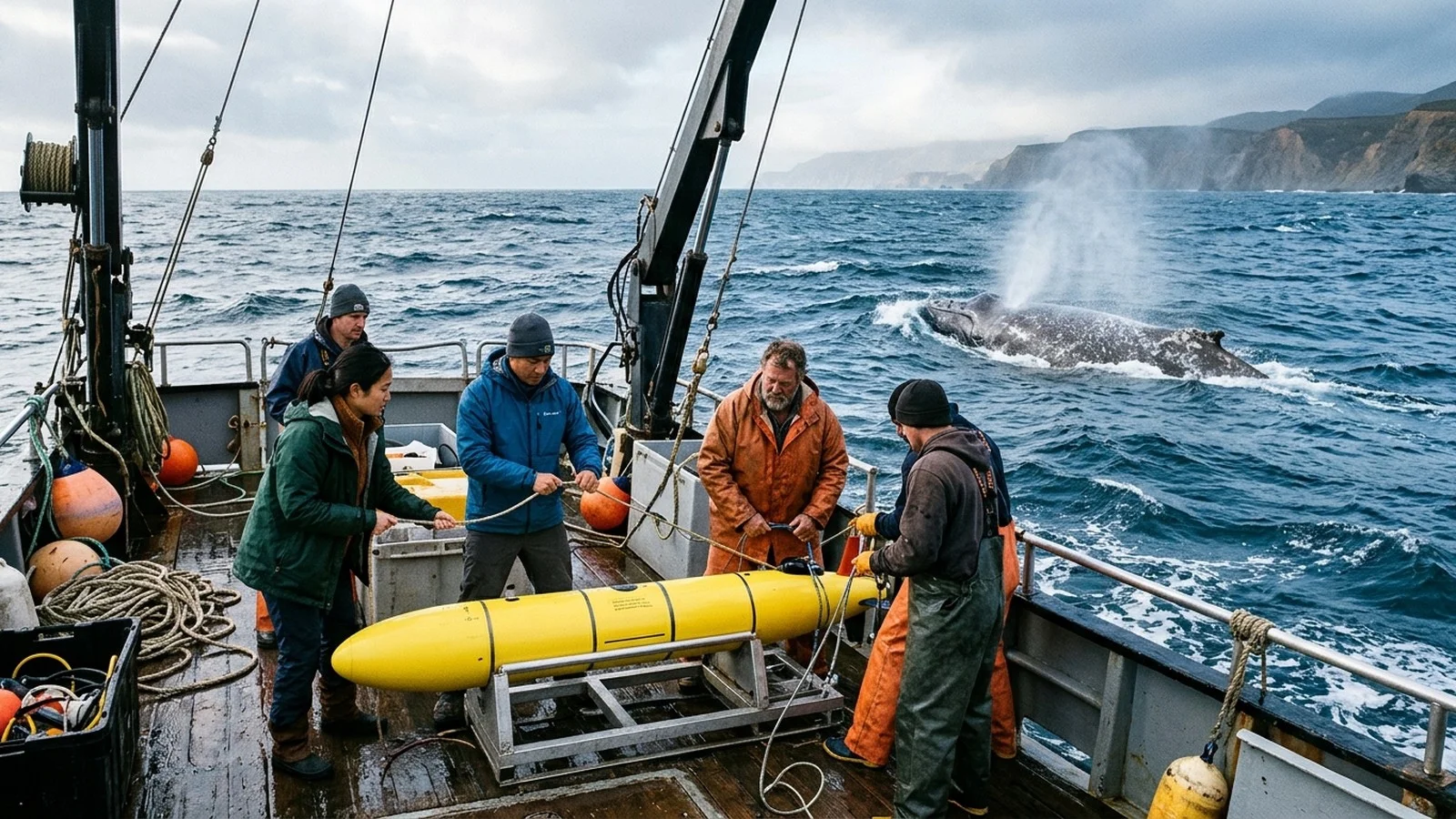
Backed by a three-year Clean Break Fund grant, The Marine Mammal Center, fishermen’s associations, and The Nature Conservancy will integrate satellite, drone, and acoustic glider data.
Your listening Queue & catch up
Add a story or build a catch-up queue to start listening.
A new coalition of marine scientists, commercial fishermen, and conservation organizations has launched the Dungeness Crab and Whale Conservation Collaborative to reduce whale entanglements in California’s Dungeness crab fishery while supporting coastal fishing communities, according to a report by Claycord.
Announced by The Marine Mammal Center, the Pacific Coast Federation of Fishermen’s Associations, and The Nature Conservancy, the initiative is funded by a three-year grant from the Clean Break Fund.
Integrating Vessel Surveys, Drones, Acoustic Gliders, and Satellite Detections
Under the partnership, researchers and commercial fishers will combine data from vessel surveys, drones, shore-based observations, underwater acoustic gliders, and satellite-based whale detections to track whale movements and behavior more accurately along the California coast:
- The Marine Mammal Center will lead the development of an integrated whale monitoring system.
- The Pacific Coast Federation of Fishermen’s Associations will engage commercial fishers directly in vessel surveys and entanglement investigations.
- The Nature Conservancy will help expand whale monitoring, advance fishing gear recovery technology, and upgrade data systems used to guide fishery management.
Informing California’s Risk Assessment and Mitigation Program
The collaborative will share its findings with the California Department of Fish and Wildlife and partner agencies to inform the state’s Risk Assessment and Mitigation Program (RAMP), which manages whale entanglement risks during Dungeness crab seasons.
Additional research partners in the initiative include the Cascadia Research Collective, Woods Hole Oceanographic Institution, the Smithsonian Environmental Research Center, and Point Blue Conservation Science.
Sources
Comments (0)
No comments yet. Be the first to share a thought on this story.