
Bay Area Aviation & Climate
UC Davis Study Warns OAK and SFO Face El Niño Holiday Flooding Risks
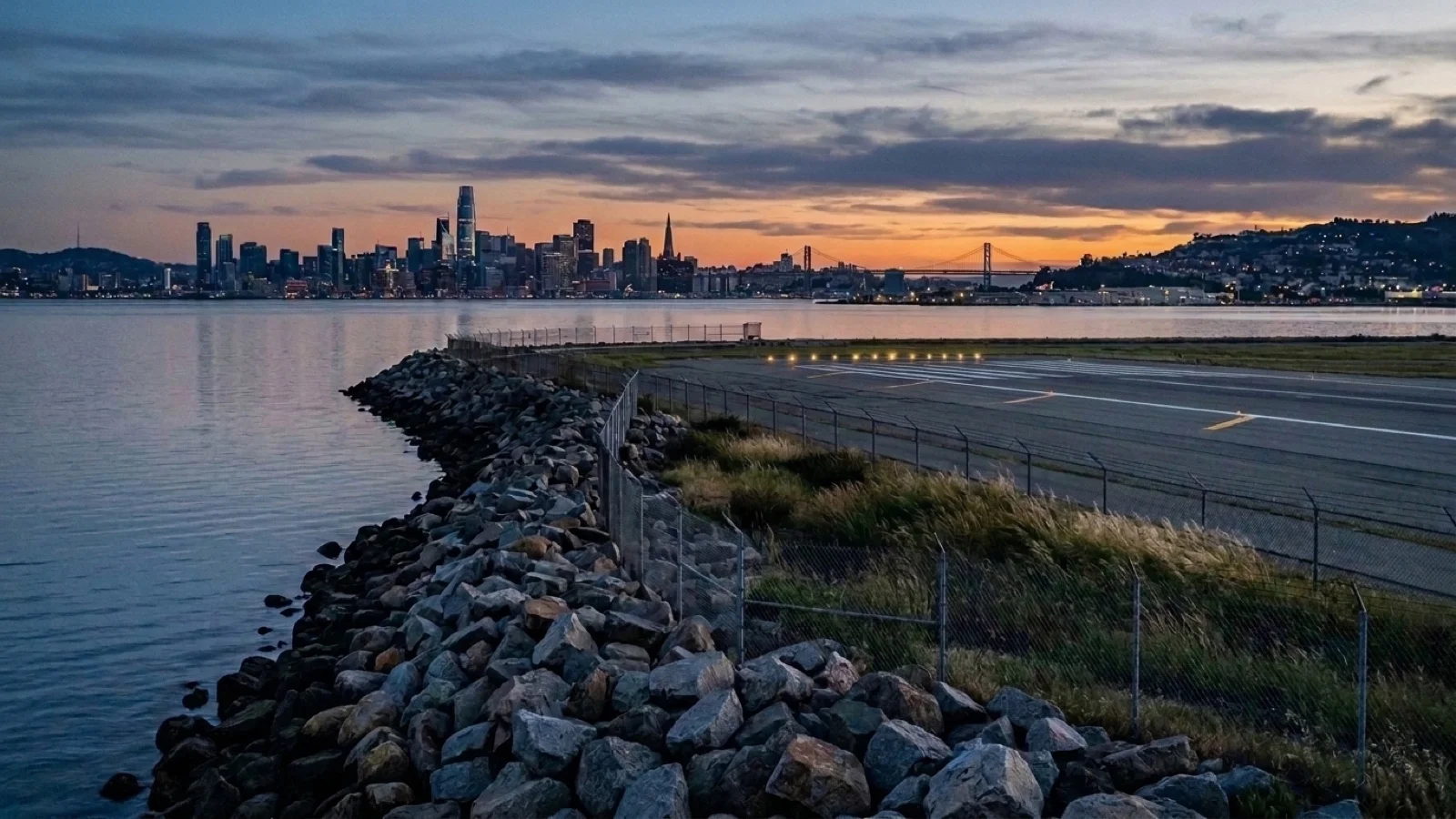
UC Davis Road Ecology Center director Fraser Shilling warns that converging king tides, Kelvin waves, and winter storms could threaten low-lying Bay Area runways, though Oakland completed a perimeter levee project 2 months ago built for 2050 conditions.
Your listening Queue & catch up
Add a story or build a catch-up queue to start listening.
Both Oakland San Francisco Bay Airport (OAK) and San Francisco International Airport (SFO) could face heightened holiday-season flooding risks during the upcoming 2026–2027 El Niño winter if coastal storm surges, king tides, and heavy rainfall coincide, according to a new UC Davis study reported Wednesday, Oct. 28, 2026 by ABC7 News.
Four Converging Drivers of Bay Area Runway Flood Risk
The study, authored by Fraser Shilling, director of the UC Davis Road Ecology Center, cautions that low-lying bayfront infrastructure at OAK and SFO faces a compound threat when multiple oceanographic and meteorological factors align during the winter travel season.
According to Shilling, an El Niño pattern generates warm Kelvin waves that travel eastward across the Pacific Ocean toward the California coast, elevating baseline sea levels while steering winter storm tracks directly into the Bay Area. When those elevated ocean levels combine with seasonal king tides and heavy freshwater runoff flowing from inland watersheds into San Francisco Bay, water levels along bayfront runways and taxiways can rise sharply.
"Think about trying to go somewhere for Thanksgiving or Christmas from SFO or Oakland," Shilling told ABC7 News reporter Tiffany Liou, noting that high water and storm conditions have historically contributed to flight delays across both hubs.
Oakland Completes 2050 Perimeter Levee Upgrade as SFO Points to Seawalls and Pumps
Shilling noted that Oakland San Francisco Bay Airport (OAK) has taken a major step to protect its primary airfield. About 2 months ago, OAK completed a project to raise and seismically reinforce the perimeter dike surrounding its main runway, providing flood protection designed for projected 2050 sea-level conditions.
In a statement to ABC7 News, OAK officials confirmed that the perimeter levee protecting the primary runway and south field—where commercial passenger and cargo operations are concentrated—was recently raised and strengthened against seismic events. Airport maintenance crews also test stormwater pump stations ahead of each rainy season, clean storm drainage lines, and stage sandbags around low-lying facilities.
At San Francisco International Airport (SFO), airport officials stated that existing shoreline defenses include vinyl sheet pile walls, concrete seawalls, and concrete-capped earthen berms along the bay perimeter, supported by regular drainage clearing, pump maintenance, and sandbag deployment before major storms. While SFO maintained that the study did not account for all of its existing flood protection systems, Shilling contended that long-term protection at SFO will ultimately require constructing a higher perimeter levee.
Sources
Comments (0)
No comments yet. Be the first to share a thought on this story.